How a Metal 3D Printer Can Reduce Costs and Lead Times in Manufacturing?
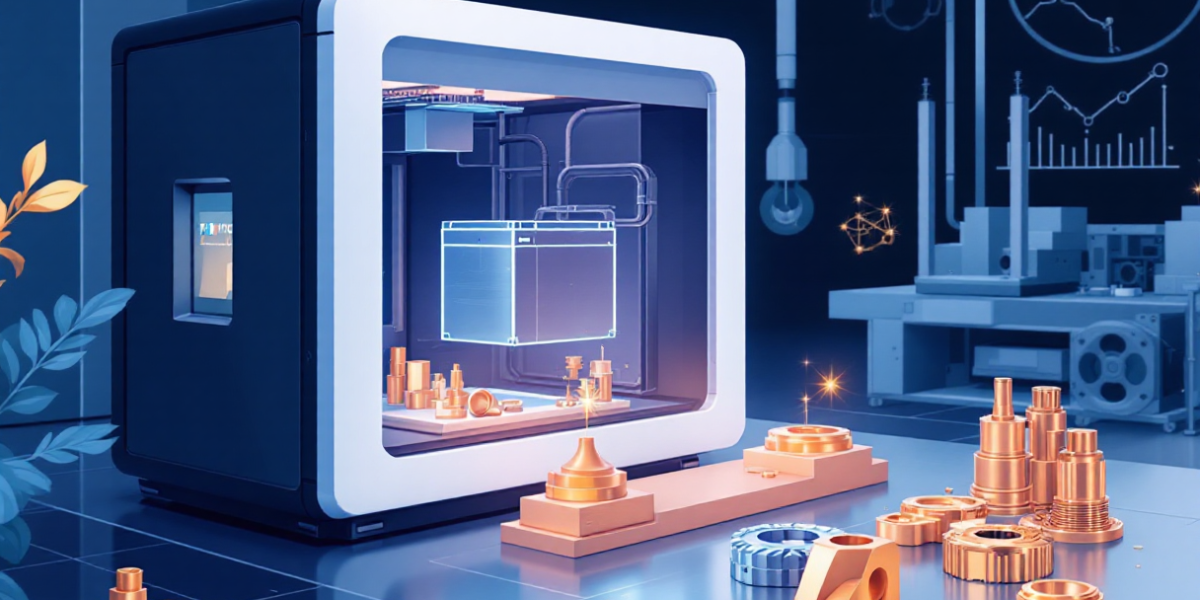
Modern metal 3D printer used in manufacturing environments. Metal additive manufacturing (AM) is transforming industries by turning digital designs directly into parts often eliminating multiple steps of traditional production. By using a metal 3D printer from prototype to full production manufacturers can cut out expensive tooling and outside vendors dramatically slashing lead times and overall cost. Because the same high-precision AM process is used for prototyping and end-use parts approval and setup times are virtually eliminated – an on-demand approach that gets new products to market much faster. In short moving to a digital-first metal AM workflow means less waste and greater efficiency – only the necessary metal powder is used to build each part. This improves manufacturing efficiency and accelerates R&D cycles giving engineers more time to innovate while reducing inventory and spare-part costs.
Why Metal 3D Printer Technology Is Transforming Modern Manufacturing
Metal 3D printing brings a new highly efficient workflow to factories. Key advantages include:
Digital tool-free production: Every build starts from a CAD file so designs go from concept to part without traditional machining setups. Industrial printers eliminate expensive jigs or injection molds cutting out two major cost drivers. The ability to tweak the digital model and print again instantly speeds iteration and reduces lead time.
Minimal material waste: Unlike subtractive methods metal AM only adds material where needed. As one analysis notes “CNC machining often results in more material waste as it cuts away excess material 3D printing uses material more efficiently only depositing what is needed for the part”. This is especially valuable when using costly alloys or titanium – every gram not wasted translates to real cost savings.
Part consolidation and supply-chain resilience: 3D printing enables combining dozens of parts into a single printed component. For example additive manufacturing often uses far fewer components… one or two instead of 20 or 30 greatly simplifying assemblies and suppliers. Fewer suppliers and fewer parts mean lower sourcing and inventory costs. Combined with on-demand distributed manufacturing (spreading printers across multiple sites) companies can meet production needs locally and avoid supply-chain bottlenecks.
Rapid design-to-part: Building metal parts layer-by-layer means no need to wait for new tooling or long vendor lead times. Complex aerospace or automotive components can be printed in hours instead of weeks. Any design change is just a file update – the metal 3D printer runs the next build immediately. This seamless digital workflow “uses the same technology in both prototyping and high-volume production runs” so prototypes and production parts match exactly speeding approval and eliminating requalification.
Enhanced manufacturing efficiency: By enabling lattice and topology-optimized designs metal printing yields lighter stronger parts with fewer assembly steps. Engineers can use topology-optimized or lattice structures that replace heavy solid parts making one-part assemblies where complex bolted structures once were. In practice this reducing material waste and providing higher strength and lighter designs than traditional methods all of which contribute to better performance-per-cost.
What Competitor Websites Typically Say About Metal 3D Printing — And What They Miss
Many 3D printing vendors highlight similar selling points : speed less waste and design freedom. They tout faster prototyping the ability to print complex geometries and minimal scrap material. While these are real benefits supplier marketing often glosses over deeper factors that industrial users must consider. For example:
Cost modeling vs. CNC: Competitors often claim speed : lower cost but true cost depends on the full workflow. In practice 3D printing yields “parts at much shorter lead times” and can reduce iteration costs but one must compare volumes and complexity to CNC. The full cost includes power materials and post-processing. Metal AM can out-compete machining at low volumes or high complexity but for very high volumes simple shapes CNC might still win. (Still for many aerospace or custom parts AM is already more economical.)
Assembly consolidation: Vendor brochures rarely emphasize how drastically AM can shrink assemblies. In reality you often replace 20–30 parts (and fasteners) with a single printed component. This eliminates multiple fit-ups and manual assembly labor a significant hidden cost in conventional manufacturing.
Powder quality: Another subtle point is metal powder quality. Not all powders are equal – purity particle size and shape heavily influence part performance. High-quality spherical metal powders produce consistent reliable parts whereas poor powders can cause defects or uneven melting that shorten part life. Few promotional sites discuss the importance of premium powder supply (a strength of suppliers like Protomont).
Print orientation and post-process: Build orientation affects surface finish strength and support needs. A part’s final cost and timeline depend on these decisions. Detailed cost models comparing oriented builds vs. CNC runs are often missing from sales materials.
Distributed/Just-in-time production: Many competitors talk about centralized production. They miss that 3D printing enables decentralized on-demand manufacturing. Parts can be printed at regional facilities as needed slashing logistics delays. This distributed approach is rarely emphasized in standard marketing collateral.
Topology and lightweighting: Marketing often shows cool shapes but doesn’t stress the design optimization potential. Advanced lattice structures and topology optimization can only be made by 3D printing yielding huge weight and cost savings in aerospace automotive and energy parts.
By understanding these factors — detailed cost modeling vs. CNC part consolidation powder specifications and supply-chain strategy — manufacturers can exploit metal AM’s full potential beyond basic speed and waste claims.
Core Applications of Metal 3D Printer Technology in Industry
Metal 3D printing is used across many sectors to create functional prototypes tools fixtures and end-use parts. Typical applications include:
Metal Prototypes and Tooling: Engineers print aluminum or steel prototypes that match final-product materials. Custom jigs fixtures and tooling (even mold inserts) are quickly printed in-house enabling faster production changes.
Aerospace Components: Critical aerospace parts like engine brackets turbine blades fuel nozzles and structural frames are now printed. For example metal printers can produce complex shapes of turbine blades gas nozzles and other key components…in a few hours significantly shortening the production cycle. Similarly, airframe brackets and frames are printed within tightly controlled tolerances reducing material waste and providing higher strength and lighter designs than traditional methods. This yields lighter stronger air vehicles and faster turnaround on customized designs.
Automotive Parts: In automotive manufacturing metal AM is used for low-volume engine components transmission parts custom fixtures and even aftermarket spares. It allows dramatically reduced R&D timelines and faster time-to-market. Rapid in-house printing of low-run transmission forks or brake components (once too expensive to mold) now replaces tooling-based methods cutting weeks off lead times. Aftermarket gear knobs and emblems are printed on demand eliminating inventory and tooling costs.
Energy and Power Equipment: The energy sector uses metal AM for complex parts like gas turbine blades heat exchanger components and advanced tooling. Companies have tested 3D-printed turbine blades in real engines and 3D printing is credited with maximized material usage in rare-metal parts. The technology lowers costs accelerates prototyping simplifies maintenance and promotes green manufacturing in the energy industry.
Medical and Tooling: Beyond these metal printers make surgical implants custom medical instruments heavy machinery jigs and spare parts for defense and industrial equipment.
Functional Metal Parts: Modern part designs leverage lattices and topology optimization. For example, a single printed heat exchanger with internal lattices can replace a bulky welded assembly. These lattice structures and topology-optimized components often collapse many parts into one: “additive manufacturing… often uses far fewer components… one or two instead of 20 or 30”. In practice we see one-part assemblies (like complex valve blocks or manifold clusters) that only metal AM can produce. This consolidation not only cuts assembly time but yields lighter high-performance parts.
How Metal 3D Printing Reduces Costs?
Metal 3D printing cuts manufacturing costs in several ways:
Minimal Waste: Printing only the needed metal drastically reduces scrap. As noted 3D printing “only deposits what is needed for the part” unlike subtractive methods that throw away most of the starting block. This means lower raw material consumption and less expense on reclaims or recycling.
No Tooling or Molds: Because metal printers don’t require custom tooling companies save on expensive mold fabrication. In fact industrial 3D printing completely removes tooling and molding from the manufacturing equation eliminating months of toolmaking and its associated overhead. Studies show replacing a tooling-based process with AM can cut part cost by 80% (as in one case of 3D-printed fixtures).
Labor and Assembly Savings: Fewer manufacturing steps mean lower labor. Complex parts that needed multiple machining setups or assemblies become single prints. This reduces manual handling and inspection costs. In one example bringing production in-house “reduced its manufacturing costs by 80% and reduced production time by 75%”. Likewise companies using AM report saving on CAM programming and operator time because the printer automates most of the build.
On-Demand and Inventory Reduction: Metal 3D printing allows just-in-time production so companies need not stockpile expensive parts. Spare components can be printed on demand from digital inventory. For instance, an OEM identified thousands of spare parts to shift to on-demand printing cutting warehouse overhead. This lowers R&D and spare-part carrying costs.
Higher-Performance Consolidated Designs: Consolidating parts into one reduces total part count and improves performance (e.g. lighter aircraft bracket). A single optimized part often outperforms the sum of its predecessors yielding operational cost savings (better fuel efficiency longer life). These performance gains contribute indirectly to cost reductions for example through lower fuel use or maintenance.
Faster R&D Iteration: Faster prototyping and iteration means engineers can identify design issues early. As one case study noted 3D printing drastically reduced portions of the long R&D timeline leading to a faster time to market. By shortening development cycles companies save on labor and tooling costs for failed designs further improving ROI.
How Metal 3D Printing Shortens Lead Times
Speed is where metal AM really shines:
Rapid Prototyping: Engineers can go from CAD to a metal prototype in a day instead of weeks for machined prototypes. Since no new tooling is needed design changes are implemented immediately. In fact typical metal prints are done in hours “significantly shortening the production cycle” for critical components. Lead times shrink because there is no (re)qualification necessary when the determination to go ahead with a prototype is made.
One-Step Production: The same printer used for prototyping switches directly to full production. There is no handoff to a secondary process which removes weeks of potential delay. Desktop Metal found that bringing printing in-house let parts be delivered to surgeons and customers much faster.
Quick Repairs and Replacements: If a part fails in the field replacement can be made within days. Companies have used metal printers to produce hard-to-find parts at need avoiding long lead times on obsolete components. One example an aftermarket transmission fork was printed and shipped in a few days greatly reducing the manufacturing lead time versus traditional procurement.
Just-in-Time Production: Distributing printers at multiple locations makes for agile production. Local printing removes delays from shipping and customs – spare or production parts can be printed wherever needed. One expert notes that decentralized AM “ensures that production – and logistics – won’t be majorly delayed by downtime at one or two locations” greatly improving resilience.
Parallel Production: Multiple printers can run in parallel on different parts or batches. What would be sequential machining or a line process can be done simultaneously on AM machines. This “accelerated manufacturing” has been shown to cut delivery from months to weeks or less.
Rapid Prototyping Saves Time: Metal AM dramatically shortens the path from concept to validated design. Companies report moving from idea to iteration in days not months. Prototyping and iteration happen essentially in real-time slashing development loops and compressing overall product timelines.
Industry Innovations Driving Adoption of Metal 3D Printers
Several recent innovations are making metal 3D printing even more cost-effective and fast:
Multi-Laser and High-Volume Machines: New metal printers use multiple lasers simultaneously or very high-power lasers allowing much larger parts to be printed in less time. Machines with several lasers can build big aerospace or automotive parts in hours.
Support-Free Geometries: Advances in process control let some printers produce parts without support structures. This saves both material and time on support removal.
AI and Process Monitoring: Artificial intelligence tunes parameters on-the-fly for consistent quality. Real-time sensors detect defects during build enabling first-run success. This reliability cuts down reruns.
Powder Recycling and Reuse: Efficient powder handling systems and improved powder screening allow used metal powder to be recycled with minimal contamination. This reduces raw material costs.
Hybrid Printing and CNC: New hybrid machines combine additive and subtractive operations (print then mill on the same machine) minimizing handoffs. This integration can cut post-processing time and tighten tolerances.
Simulation-Driven Workflow: Better simulation software predicts thermal distortion and optimal build orientation before printing reducing trial-and-error. As a result printers spend less time on failed builds.
Cloud-Connected Manufacturing: Modern AM systems integrate into smart factory networks. Build jobs quality data and material usage are tracked in real time over the cloud improving scheduling and maintenance. This connectivity leads to higher uptime and throughput.
These innovations: from multi-laser builds to AI-driven quality control — continually drive productivity gains in industrial 3D printing making metal AM more competitive every year.
Why Protomont Technologies Leads in Metal 3D Printing
Protomont Technologies stands out by offering turnkey industrial-grade metal AM solutions and expertise:
Advanced Metal 3D Printers: Protomont’s lineup includes high-power selective laser melting (SLM) systems and binder-jet printers. For example, their EP-M series (like the EP-M650 and EP-M4750) are large-format machines with multi-laser configurations built for high-throughput metal production. These printers handle popular alloys and even exotic metals at production scale.
High-Purity Metal Powders: Protomont supplies top-quality metal powders for 3D printing. Their portfolio includes titanium aluminum tool steels nickel superalloys (Inconel) stainless steels copper and more. Each powder is tightly controlled for particle size and chemistry ensuring precision metal manufacturing and part reliability. (Poor powder would undermine the benefits above so Protomont sources only high-quality feedstock.)
Full AM Workflow and Consulting: Beyond hardware Protomont provides end-to-end additive manufacturing services. Their engineers offer DfAM (design for additive manufacturing) guidance simulation prototyping and production consulting. Customers can tap into expertise on build orientation support design and post-processing to maximize parts’ performance.
Prototyping to Production Support: Protomont helps scale projects from one-off prototypes to large batch runs. They offer design support and process validation so that a part designed for AM today can go straight to production with predictable quality and traceability.
On-Demand Metal Services: Through Protomont’s service bureau manufacturers can print low-volume production parts or urgent spares without buying equipment. This on-demand model means users still gain fast AM lead times and low inventory with Protomont as the trusted producer.
By combining state-of-the-art metal printers premium metal powders and expert support Protomont delivers the performance and reliability that professional manufacturers demand. Whether you need a workhorse machine like the EP-M825 or specialized materials like high-temp Inconel Protomont has you covered.
Protomont’s high-performance metal 3D printing solutions enable precision parts from concept to production.
Ready to Transform Your Manufacturing Workflow?
Protomont Technologies is your partner for cutting-edge metal AM. Contact us to learn how our industrial metal 3D printers high-purity powders and turnkey AM services can streamline your manufacturing. Whether you aim to reduce time-to-market cut costs or produce complex metal parts on demand Protomont’s end-to-end solutions and consulting will help you succeed.
Contact Protomont today to discuss machines like our EP-M series printers explore metal powder options or get prototyping and production support. Let’s accelerate your path from CAD to final part with advanced metal additive manufacturing.
Conclusion
A metal 3D printer fundamentally changes how parts are made: it slashes waste cuts out tooling delays and shortens the journey from design to finished part. By adopting metal additive manufacturing companies enjoy unified digital workflows massive part consolidation and the flexibility of just-in-time production. The result is real savings — in scrap material labor inventory and time – paired with enhanced design freedom and performance.
In today’s competitive markets (automotive aerospace energy defense etc.) those who leverage metal 3D printing gain a decisive efficiency advantage. As one industry report states metal AM drastically reduce[s] the full process of getting a new product to market… making it cheaper and faster. Protomont Technologies provides the machines materials and expertise to realize those benefits. Embracing metal AM means cutting costs and lead times — so transform your manufacturing with Protomont’s metal 3D printer technology today.