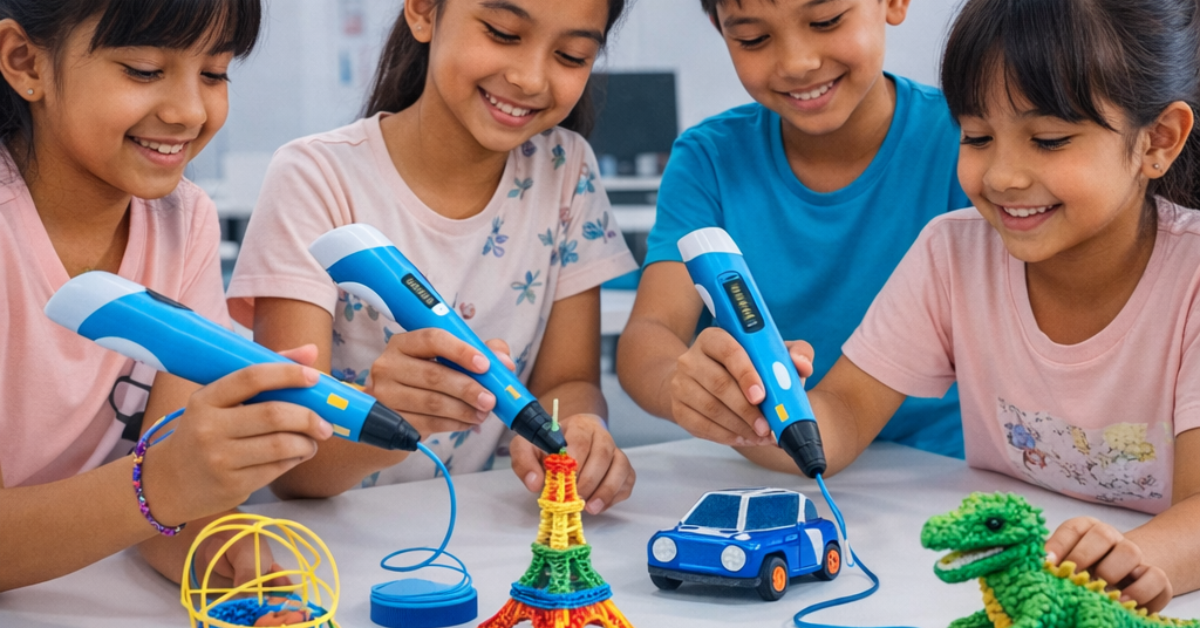
What You Didn’t Know You Could Do With a 3D Printing Pen?
A variety of 3D printing pens from simple models to advanced versions. A 3D printing pen works like a miniaturized 3D printer in your hand: it melts plastic filament and lets you draw freehand in three dimensions. These pens are surprisingly affordable and portable offering “a portable inexpensive way to experience 3D printing” without the cost or complexity of a full size printer. In practice you can use a 3D printing pen in countless creative and practical ways. For example with a tool like Protomont’s Melt 3D pen and our Filamont brand PLA filaments hobbyists and students alike have built everything from artistic sculptures to simple home gadgets. Below are some of the most interesting 3D printing pen uses you may not have considered from decorative art to DIY fixes and STEM education.
Creative & Decorative Uses
An artist drawing with a 3D printing pen building up plastic lines layer by layer. One of the most popular uses of a 3D pen is freehand 3D art. The pen extrudes thin streams of melted plastic that immediately harden so you can literally draw in midair to create sculptures wall hangings and abstract designs. For instance you can sketch and connect simple geometric shapes cubes pyramids rings then build them up into intricate 3D artworks. With practice artists draw curved vases figurines or unique ornaments entirely out of plastic filament. These freeform doodles can produce impressive wall art or figurines far beyond flat paper drawings.
- Abstract Sculptures and Wall Art
You can doodle in the air to form geometric or organic shapes that become abstract sculptures. Many users create decorative 3D wall panels or detailed mini statues by building up layer upon layer of filament. For example one blog notes you can draw “curved vases sculptural furnishings and artistic wall hangings” freehand. - Custom Decor on Everyday Objects
A 3D pen can also customize household items. Draw patterns textures or embellishments directly onto plain vases jars or picture frames. For example you might take a simple ceramic pot and add raised floral designs or swirls with the pen giving it a unique 3D look. These textured overlays turn ordinary items into one of a kind art pieces. People have even rebuilt entire container shapes by layering plastic in place of glass or ceramic the pen lets you grow new objects piece by piece. - Wearable Art Jewelry and Accessories
The fine tip of a 3D pen is perfect for crafting custom jewelry and fashion accents. You can sketch tiny chains of plastic to form bracelets earrings or pendants. Many use their pens to embellish phone cases shoes or handbags by drawing directly on those surfaces. For example adding whimsical 3D flowers or initials onto a plain phone cover makes it uniquely yours. Shoe lovers often draw fun patterns or even words onto canvas shoes or Crocs turning everyday footwear into personalized art pieces.
Each of these creative uses shows how a 3D printing pen can transform ordinary materials into customized art. Even beginners can join in pens like the Melt3D come with simple controls some with an LCD display for temperature and speed so anyone can start drawing in 3D with a little practice. And using PLA filament such as our Filamont brand helps because it melts at a lower temperature and emits almost no fumes making it ideal for indoor art projects.
Practical DIY and Utility Projects
Beyond art and decoration 3D pens are surprisingly useful for home DIY and repairs. Because the pen can “weld” plastic pieces together it’s a handy tool for quick fixes around the house. You can also create custom small objects on demand without complicated tools. For example:
- Household Gadgets and Organizers
Use a 3D pen to build simple helpers like cable clips phone stands hooks or pen holders. A creative user might draw a custom phone stand on the spot to hold up their smartphone or fabricate a small drawer organizer for desk supplies. According to one guide you can even “create stands hooks cable organizers hinges handgrips basic repairs and customized accessories” with a 3D printing pen. These small functional items show how 3D pen use extends to practical life hacks. - Repairing and Reinforcing Plastic Items
Have a cracked phone case broken toy or split kitchenware Instead of tossing it you can repair it with a 3D pen. Simply extrude fresh filament along the crack or broken edge the hot plastic fuses with the old material to “weld” it shut. As one source explains you can fill gaps in cracked plastic parts and “weld” pieces back together making a quick fix much easier than buying replacements. This is a great 3D printing pen use for anyone looking to reinforce or patch plastic items without glue. - Rapid Prototyping and Modeling
Designers and hobbyists use 3D pens to mock up ideas on the fly. For instance you can sketch a 3D prototype of a product or part in seconds. One blogger notes that engineers and inventors often use a pen in the early design stage to “quickly mock up rough prototypes” of shapes or ergonomics. Want to test how a new handle feels in your hand Draw a rough version with a pen and tweak it instantly. This use of a 3D pen makes it possible to iterate designs without any CAD software or waiting for a print capturing ideas the moment inspiration strikes.
Educational and STEM Applications
3D printing pens are not just crafts toys they’re powerful educational tools. In classrooms and homes teachers and parents use them to bring STEM concepts to life. Key educational uses include:
- Learning Geometry and Spatial Reasoning
When students draw and build shapes with a 3D pen they gain hands on experience with geometry. Drawing lines cubes or triangles in free space helps kids grasp how shapes form volumes. Research notes that “drawing in 3D enhances children’s geometric thinking and dexterity” and that they pick up engineering and math concepts by molding shapes. Manipulating objects in three dimensions also improves spatial awareness an essential skill in science and engineering. In fact building a model atom or cell with a 3D pen can make abstract lessons concrete one education guide suggests students learn atomic structure by 3D printing a Rutherford model of an atom. This tangible approach can help learners visualize complex systems. - Encouraging Problem Solving and Creativity
Using a 3D pen requires planning and experimentation which builds critical thinking skills. When kids design and construct with the pen they encounter problems like balancing a structure or connecting parts that they must solve. Studies report that “designing and constructing with the 3D pen encourages critical thinking and problem solving”. The open ended nature of 3D pen projects also encourages creativity there’s no one “right answer” so children and adults feel free to experiment. For example one fun exercise is “aimless doodling” letting users create abstract shapes and interlock them to see what emerges. These creative experiments often spark new ideas and reinforce learning. - Low Barrier Entry to 3D Design
Unlike traditional 3D printing a pen doesn’t require complicated software or training. As one educator notes you don’t need CAD skills no software is required to use a 3D pen. Students can draw directly in 3D and see instant results. This immediacy makes pens ideal for younger learners or beginners. In fact 3D pens are often promoted as a first step toward more advanced 3D tools because they “eliminate the barrier” of technology. Simply put kids can focus on their creativity and discovery rather than menus and settings. This also means pens are suitable for unsupervised play with minimal setup just plug in filament and start drawing. - Cross Disciplinary Projects
3D pens can tie into science art and engineering lessons. For instance in science class students might build a model of the solar system or a cell membrane. In art class they could create a 3D relief painting by adding plastic texture to a canvas. One resource even suggests using a pen to build molecules and cells making it easy to compare prokaryotic and eukaryotic cell parts. This hands on approach makes STEM subjects interactive and memorable.
Overall 3D pen use in education helps students learn by doing. It provides tangible feedback engages multiple senses visual tactile and brings abstract concepts into the physical world. Teachers report that incorporating 3D pen activities makes lessons more interactive and keeps learners engaged.
Artistic and Mixed Media Possibilities
Beyond straightforward art and models 3D pens can be combined with other materials for inventive effects. Some creative ideas include:
- Custom Figurines and Models
Skilled users craft detailed mini figures and toys with 3D pens. For example one blog shows artists recreating cartoon or game characters in miniature form. By carefully layering filament it’s possible to make surprisingly sturdy models of animals monsters robots or abstract art objects. This is like sculpting in plastic a great 3D pen use for hobbyists. - Mixed Media Artwork
You can add 3D texture to flat artwork. Painters and crafters might draw a 3D border around a painting or embellish a scrapbook page with raised filament shapes. A 3D pen lets you “paint” in relief for instance one can apply plastic outlines onto paper or cloth to create a new dimension. Some artists have even stitched filament onto fabric to make glow in the dark clothing or used it to create lace like patterns that look hand crafted. By combining 3D printed plastic with wires beads or fabrics crafters achieve unique mixed media effects not possible with traditional tools. - Wearable Cosplay and Props
Hobbyists use 3D pens to fashion costume pieces and props. For example you might draw a light rigid shape for a mask or helmet frame directly with the pen then paint it. Or create small costume accents like brooches horns or armor details. Because the filament cools quickly these bits can be made in minutes. Cosplayers appreciate 3D pen use for customizing pieces without needing complex 3D printing setups. - Holiday and Party Decorations
Creative crafters have used 3D pens to make ornaments light switch covers and other festive items. For instance one could draw snowflakes holiday figures or garlands in plastic to hang around the house. Because the filament comes in many colors it’s easy to make personalized decorations or gift tags.
These artistic experiments demonstrate that 3D printing pen use isn’t limited to “just drawing”. It’s a flexible medium that interacts with painting sewing electronics and more. For anyone who likes to tinker across art forms a 3D pen becomes a bridge between digital fabrication and hands on craft.
Why 3D Pens Are Surprisingly Versatile
All of the above uses point to one conclusion 3D printing pens are incredibly versatile tools. A few reasons for their broad appeal:
- Low Barrier to Entry
As noted 3D pens eliminate the need for software. Users can start drawing immediately without dealing with CAD or 3D modeling programs. This makes them approachable for kids and adults alike. One review emphasizes that children can “focus on their creativity without being overwhelmed by technical details”. In practice this means a wide range of people from elementary school students to hobby artists can use a 3D pen right away. - Affordable and Portable
Compared to desktop 3D printers which can cost hundreds of dollars 3D pens are relatively inexpensive. Filament spools like our Filamont PLA are also cheap often costing only a few dollars for dozens of feet of material. As one source notes pens offer a “portable inexpensive way to experience 3D printing”. You can easily carry a pen a battery pack and some filament to a school workshop camping trip or craft fair. This mobility encourages spontaneous creativity ideas don’t have to wait for a lab session. - Bridging Art and Utility
A 3D pen effortlessly switches between playful art and practical work. With the same tool you can make a decorative figurine then immediately switch to gluing together a broken plastic toy. One FAQ even highlights that 3D pens can do both fun projects and quick fixes listing items like custom accessories alongside hooks and stands. In other words it’s not just a toy or a tool it’s both. - Easy Experimentation and Customization
Artists and makers love tools that allow rapid iteration and a 3D pen is great for that. Because you control it freehand you can try out crazy ideas on the fly. One blog suggests letting kids doodle random abstract shapes surprisingly those “unplanned connections” often yield creative inventions. You can quickly melt away mistakes or add more material tweaking designs fluidly. Also because filaments come in many colors and even materials every project can be highly customized. For instance PLA filament used in our Filamont brand is biodegradable and low odor making it safe for indoor use while ABS or specialty filaments add strength or glow in the dark effects. A pen user can swap filaments mid project to layer colors or properties giving a personal touch to every creation.
Conclusion
In summary a 3D pen is suitable for an astonishing range of applications from home decor to classroom science. Beginners appreciate the immediate results and easy learning curve while experienced makers use it for niche tasks like detailed accents or repairs. Whether you need a quick prototype of a gadget a creative birthday present or just some hands on learning a 3D printing pen can do the job.
At Protomont Technologies we’ve embraced this versatility in our products. The Melt3D pen model for example includes features like an LCD display and selectable temperature settings to support different filament types. Using it with our Filamont PLA filament biodegradable low fume plastic you can safely explore all the projects above from fancy jewelry to household fixes. In all 3D printing pen use is limited only by imagination. We hope this article has sparked new ideas for what you can do with a 3D pen next.