Why Does 3D Printer Filament Matter? The Impact of Filament Quality on Your Prints
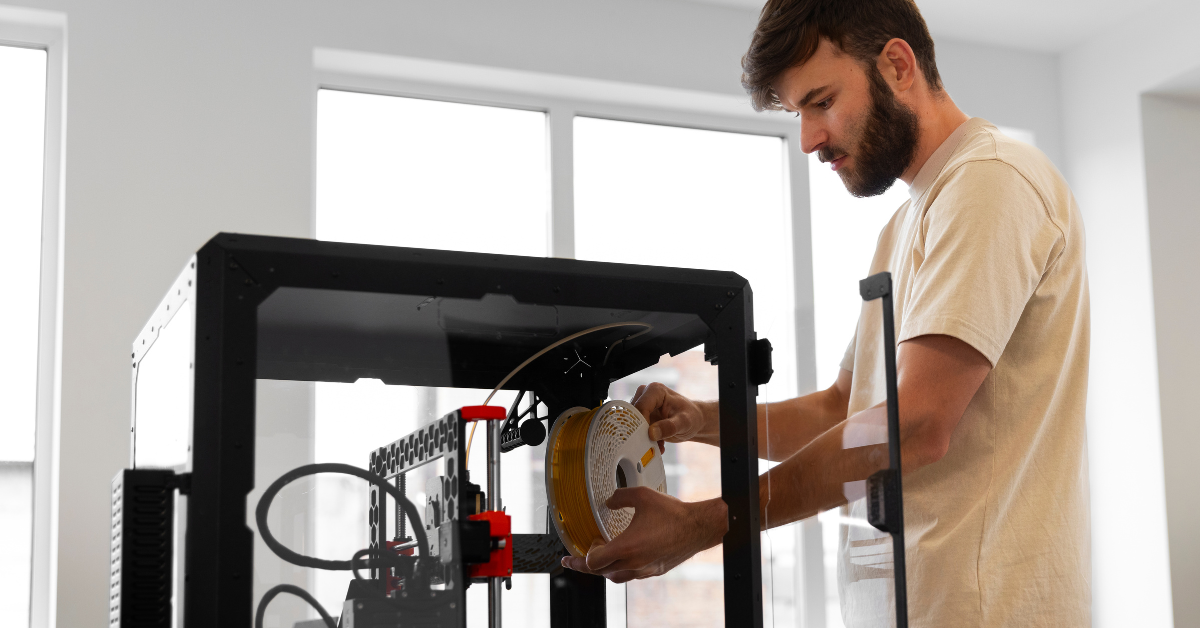
3D printer filament is the “ink” of your 3D printer a long, thin strand of plastic that feeds into the extruder and is deposited layer by layer to build your object. Most consumer FDM printers use 1.75mm diameter filament (some use 2.85mm). The material comes on a spool and can be made of various plastics (PLA, ABS, PETG, TPU etc.) or blends. For Indian users from hobbyists in Delhi to industrial prototypers in Bengaluru filament quality is critical. In a growing market like India inconsistent filament diameter and material purity can disrupt prints and increase waste. This article explains why investing in high-quality filament (like Protomont’s FiLAMONT brand) pays off in smoother prints, fewer failures and better part performance.
What Is 3D Printer Filament?
Filament is simply a polymer “wire” wound on a spool for FDM 3D printers. It’s pushed into a hot nozzle and melted depositing plastic in layers. Common materials include PLA (a plant-based plastic) ABS (a petroleum based plastic), PETG, TPU and specialty composites. As Protomont notes, “Most 3D printer filament comes in one of two standard diameter sizes: 1.75mm or 2.85mm”. The printer’s settings must match the filament diameter exactly. These filaments come in a range of colours and finishes (matte, gloss, silk, glow-in-the-dark etc.). In India, you can buy 3D printer filament from online retailers (Amazon India, Flipkart, IndustryBuying, etc.) or directly from brands like Protomont. FiLAMONT filaments are sold by the kilogram and often in bulk packs suitable for both consumer 3D printing and industrial prototyping. Always check that your printer supports the filament type and diameter you select most modern printers (e.g. Creality Ender/Anycubic) support 1.75mm filament.
Understanding filament basics is key for any user from a DIY hobbyist to a professional engineer. Think of filament like paint for your 3D printer: different “paints” (materials) and quality of paint affect the final picture (print). The rest of this article will dive into why filament quality matters for print success how poor vs premium filament behaves what to expect from each filament type and how to choose the right one for your needs.
Why Filament Quality Matters
Filament quality is the difference between a great print and a frustrating failure. Even small inconsistencies can cause problems. A primary issue is diameter tolerance. Printers (via slicing software) expect exactly 1.75mm (or 2.85mm) filament. If the spool varies by even a few hundredths of a millimetre extrusion will be off. Protomont Technologies explains that if your filament “is not the same diameter as what the slicer is expecting, your print will not look as good as it should… it can lead to small holes, missing sections, too much filament in places, and other issues”. In other words, under- or over-extrusion causes layer gaps, blobs, or weak areas. High-quality filaments are made to ±0.02mm or so, whereas cheap filaments may be ±0.05mm or more. This precision ensures consistent flow rate and layer bonding throughout the print.
Other quality factors include material purity and additives. Low grade filament may contain contaminants or non-virgin (recycled) plastic which can weaken parts or clog the nozzle. For example white filaments often use titanium dioxide pigment which is abrasive. Even specialty additives can be tough: carbon fiber or glass fiber filled filaments can wear down a brass nozzle in no time. One tester notes that “carbon fiber or even glass fiber reinforced materials can chew away a nozzle in no time”. Similarly glow-in-the-dark PLA contains phosphorescent compounds that can erode a nozzle quickly. Thus using proper quality filament (and the right nozzle material) is vital to prevent equipment damage.
Quality filament also prints more reliably. A well dried evenly wound spool feeds smoothly without tangles or jams. It melts predictably and layers adhere consistently. In contrast cheap filament often comes moist or tangled causing clogs or under extrusion. As Protomont warns, while it’s tempting to buy the cheapest spool, “in the long run, it is the best filament that saves you money. Cheap filament can cause problems from bad prints to clogged equipment… costing you time and money in lost prints and repair time”. In summary poor filament can lead to:
- Print defects: Warping, layer splitting, blobs, stringing or holes due to uneven flow and poor adhesion.
- Clogs and maintenance: Jams in the hotend and extruder, requiring time-consuming cleaning or new parts.
- Material waste: Failed prints that must be reprinted wasting filament and electricity.
- Machine wear: Abrasive fillers can wear the nozzle and gears faster.
High-quality filament minimizes these issues. Consistent diameter tolerance and roundness ensure the printer extrudes smoothly. Good polymer purity and proper drying mean stronger layer bonding. In short filament quality directly impacts layer bonding, part strength surface finish and print reliability. Investing in a premium reliable brand (like FiLAMONT) can save time and money in the long term.
Impact of Poor vs. Premium Filament
Imagine running a long print on a cheap inconsistent filament: halfway through it jumbles or detaches forcing you to scrap the part. That’s what happens with subpar materials. In practice poor filament often leads to repeating problems:
- Frequent failed prints: The part might warp or delaminate especially on large areas.
- Time loss: Hours of printing are wasted on flawed pieces.
- Equipment downtime: Filament tangles or clogs stop the printer requiring disassembly and cleaning.
- Economic cost: Although the raw cost per spool is lower the hidden cost of wasted material electricity and time adds up.
By contrast, premium filament offers reliable performance. Tight tolerances (e.g. ±0.02mm) mean layers line up correctly yielding smooth surfaces and strong parts. 3D-Fuel points out that a high-end filament saves money because it prevents these issues. With premium filament you can print with confidence: large or detailed models finish as intended requiring little rework. The extra upfront cost is offset by higher yield and less frustration.
For example if you’re printing a mechanical gear or a structural bracket a premium filament will deliver consistent strength and dimensional accuracy. In contrast, using a random cheap spool could produce a part that’s underfilled, brittle or warped. Good filament often has better material properties (improved tensile strength, uniform color engineered additives) ensuring the final part performs to spec.
Ultimately choosing quality filament is like buying quality tools or parts: it may cost more at purchase but it prevents failures and downtime. As one expert says “In the long run it is the best filament that saves you money”.
Detailed Breakdown by Filament Type
Different filament types have different characteristics. Below is a rundown of the most common materials, their uses and how quality plays a role.
PLA Filament
PLA (polylactic acid) is a plant-based biodegradable plastic and the most beginner-friendly filament. It prints at low temperatures (around 200–220°C) and does not require a heated bed it sticks well to glass or blue tape by itself. Notes that “PLA is one of the easiest materials to work with… Its low melting temperature (200–220°C) ensures smooth extrusion even on entry-level printers. You don’t need a heated bed… PLA produces minimal warping so your prints maintain their shape and quality”. In other words, PLA is forgiving: it rarely warps or cracks during printing, making it ideal for learning and for detailed models.
PLA is also very eco-friendly. It is made from renewable resources like corn starch or sugarcane and is biodegradable under industrial conditions. With growing sustainability awareness in India, demand is rising for such eco filaments. Additionally PLA is cheap and widely available. Sovol even calls PLA “one of the most affordable options for 3D printing” which is why it drives much of the Indian education and hobbyist market.
Specialty PLA variants add flair: silk PLA has a shiny, almost metallic finish; matte PLA gives a flat look; wood PLA contains sawdust for a wood-like texture; glow-in-the-dark PLA has luminous pigments. For example Protomont’s FiLAMONT line includes a glossy “silk PLA” for aesthetic models. These specialty blends are still PLA at heart, but print somewhat differently and often cost a bit more.
In summary: PLA is best for beginners decorative prints, prototypes and any use where you want easy eco-friendly printing. Its drawbacks are that it’s relatively brittle and has low heat resistance (parts soften around 60–65°C). But for most hobby and educational projects quality PLA (e.g. from FiLAMONT) yields crisp details with minimal hassle.
PETG Filament
PETG (Polyethylene Terephthalate Glycol) sits between PLA and ABS in terms of strength and flexibility. It combines the ease-of-printing of PLA with enhanced toughness. As Sovol explains, PETG “offers a unique balance between strength and flexibility… high tensile strength, impressive impact resistance and smooth printing performance”. In fact in tests PETG’s impact resistance is nearly double that of PLA meaning parts can absorb shocks or drops much better. PETG also naturally produces smooth, glossy finishes and has excellent layer bonding. It even resists moisture, UV light and heat surprisingly well Sovol notes that PETG “resists moisture UV light, and heat so your prints stay strong outdoors or in harsh environments”. This makes PETG great for functional parts like phone holders gears outdoor fixtures or containers.
PETG is relatively easy to print: it has low warping (less than ABS) and good bed adhesion (often a heated bed at ~60–75°C yields best results). Its moderate flexibility also helps parts absorb stress rather than shatter. On the downside PETG requires a slightly higher nozzle temperature (around 230–250°C) than PLA and can string if settings aren’t tuned. High-quality PETG filament will have tight tolerance and drying, so it extrudes reliably without popping or oozing.
In summary: PETG is a strong durable filament ideal for functional prototypes and mechanical parts. It bridges the gap between hobby and industrial use. When we want “strong 3D printer filament” or “impact resistant filament,” PETG is a top choice. Good PETG (like FiLAMONT PETG) will print consistently and yield parts that remain reliable even in hot or outdoor conditions.
ABS & ASA Filament
ABS (Acrylonitrile Butadiene Styrene) is a workhorse engineering plastic. It prints at high temperatures (220–250°C) and produces rigid, heat-resistant parts (HD resins in ABS can handle up to ~100°C). It’s commonly used for functional prototypes, enclosures, and automotive parts. The downsides are that ABS warps a lot and emits fumes and odor so a heated bed and enclosure (or a very well-ventilated space) are needed.
ASA (Acrylic Styrene Acrylonitrile) is a cousin of ABS designed specifically for outdoor use. ASA has nearly the same strength and print settings as ABS, but it is highly UV-resistant. In other words ASA parts won’t yellow or become brittle in sunlight making it ideal for outdoor fixtures or automotive components. ASA also has slightly better heat resistance (about 5°C higher heat deflection than ABS) and is generally more dimensionally stable (less warping) than ABS.
Quality matters especially for these materials: ABS/ASA require tight temperature control. A premium ABS filament will be fully virgin (no reused plastic), ensuring uniform strength and minimal odor. ASA likewise benefits from consistent extrusion. Chinese or off-brand filaments in this category often vary wildly leading to adhesion failures or part cracking. In fact, market reports note that without quality standards filament variability “can affect print accuracy and durability” which is critical for engineering plastics like ABS/ASA.
In summary: Use ABS filament for indoor, high-strength or heat-tolerant parts (e.g. mechanical fittings heated enclosures). Use ASA when you need outdoor durability and UV stability (e.g. housing for LED lights, car parts, garden gadgets). Both require a tuned printer (heated bed ~90–110°C, enclosure to prevent warping) and good airflow for fumes. Premium ABS/ASA (like FiLAMONT’s) will minimize warping and give reliable results.
TPU / Flexible Filament
TPU (Thermoplastic Polyurethane) is a flexible rubber like filament. It comes in different hardness levels, often rated on the Shore A scale. For example, 95A TPU is quite firm (like a sneaker sole), but still bendable. TPU filaments yield highly elastic parts that can stretch or compress and return to shape. They are perfect for gaskets, phone cases, hinges, wearables, or any part that needs shock absorption.
As describes, “TPU 3D printing filament is a soft flexible plastic that retains its shape… a bendable yet strong and durable plastic that draws comparisons to rubber”. It also resists oils and greases well making it suitable for industrial or automotive parts. High-quality TPU prints clear, glossy parts with good layer adhesion, but it can be challenging to feed: it often jams in Bowden extruders and must be printed slowly (e.g. 20–30 mm/s) to avoid buckling. Most PLA/ABS printers can print TPU if slowed down and if the extruder has a good grip (many use a direct drive for TPU).
In summary: TPU filament is the choice for flexible, impact-absorbing parts (like a rubber bumper or wearable prototype). FiLAMONT’s TPU (e.g. 95A) will deliver consistent elasticity. Be sure to print TPU carefully: use a slow speed, optional enclosure off (cooling is fine) and keep filament dry. When printed well TPU parts will flex without breaking, ideal for cases seals or shoe soles.
Specialty Filaments
Beyond the standard plastics there are specialty filaments that add unique features:
- Glow-in-the-dark filament: Usually a PLA or PETG base mixed with phosphorescent pigments. Prints absorb ambient light and glow in the dark. Great for novelty items and safety signs. (Note: the phosphor fillers are very abrasive, so use a hardened nozzle and expect faster wear.)
- Wood PLA: A PLA blended with fine wood powder. Prints look and smell like wood and can be sanded or stained. Popular for decorative items.
- Metallic/Marble PLA: PLA with mineral fillers (e.g. iron for metallic look, or calcium carbonate for marble effect). They produce shiny or stone-like finishes. Require slightly slower print speeds to maintain detail.
- Carbon-Fiber Reinforced: Typically PLA or PETG filled with chopped carbon fibers. Produces very stiff, lightweight parts (used in drones, RC, racing). Extremely abrasive they will destroy a brass nozzle quickly so a hardened nozzle is mandatory. FiLAMONT offers a carbon-fiber PLA for such stiff prototypes.
- PETG/PCTG variants: Including transparent PETG (for clear parts) nylon blends (for chemical resistance), and many others.
These specialty filaments are used when you need more than just plastic: glow filaments add safety or fun lighting effects wood/stone filaments give aesthetic textures without painting and fiber composites give industrial-grade strength. As Sunlu notes these “special texture or color filaments… bring different features to your products and eliminate the trouble of coloring”. In other words, they save you from painting or finishing if you want an integrated effect. Just be aware that with exotic filaments quality is crucial cheap knock offs may clump fillers poorly and cause even more print issues.
Key point: If you plan to print with abrasive or advanced composites invest in a branded filament and consider hardened tools. Cheap “carbon fiber PLA” could ruin your nozzle whereas a trusted brand’s fiber filament will at least meet spec and has consistent fiber content.
How to Choose the Right Filament?
Selecting filament depends on your application:
- Purpose of the print: For simple prototypes or decorative items PLA filament is often best (especially for beginners). For functional parts needing strength or slight flexibility go with PETG. For high-temperature or UV-resistant parts, use ABS or ASA. For living hinges or gaskets, use TPU. Specialty materials (carbon fiber, nylon etc.) are for specialized uses.
- Environment: Is the part indoors or outdoors? Will it see sunlight, moisture or chemicals? ASA or PETG are preferred for outdoor exposure. ABS/PLA can degrade or warp outside.
- Strength vs. flexibility: If you need stiffness and heat resistance, ABS/PC/Nylon are top choices. If you need a bit of give or impact-absorption, TPU or PETG are better.
- Printer capability: Does your printer have a heated bed or enclosure? Only those can reliably print ABS/ASA. All hobby printers can run PLA/PETG/TPU (with tweaks). A direct-drive extruder greatly helps with TPU.
- User level: Beginners should start with PLA for its forgiving nature. More advanced users can experiment with PETG, ABS, or composites.
- Finish and color: Think about appearance – FiLAMONT offers filaments in rainbow, metallic, silk/glossy and matte finishes for when aesthetics matter. You might choose a silk PLA if you want shiny, brilliant models, or a matte PLA for a subtle look.
- Budget and quality: Low-cost filament can be tempting, but balance price with reputation. Often, buying a bit more of a known brand (Protomont’s FiLAMONT is an Indian brand known for consistent quality) avoids headaches later.
In practice, make a checklist: material, diameter (1.75mm vs 2.85mm), color/finish, spool weight, and supplier reliability. Use local criteria too – “Made in India” or GST invoice options can benefit businesses in India. For example, FiLAMONT filaments are manufactured in India and available with GST invoicing, making it easy for Indian companies to order in bulk. Always match the filament to the project’s needs and your printer’s specs.
Why FiLAMONT Filaments by Protomont
Protomont Technologies LLP is a Mumbai-based additive manufacturing firm that has been growing India’s 3D printing ecosystem. As an Indian brand, FiLAMONT filaments are made locally under strict quality control. By producing filaments in India, Protomont can ensure consistent diameter tolerance (often around ±0.02mm) and fast delivery across the country. In fact, Sovol highlights that a filament with “a tight diameter tolerance of ±0.02 mm guarantees smooth extrusion and reliable printing” – a standard that FiLAMONT aims for.
FiLAMONT’s lineup covers all major materials: standard PLA (including easy-print, low-warp PLA+ and glossy “silk” PLA), PLA in matte or wood variants, PETG, ABS, ASA, TPU (for flexible parts) and specialty filaments like carbon-fiber PLA. For example, FiLAMONT “silk PLA” gives prints a glossy finish without extra polishing. The TPU filament is formulated for elastic parts like gaskets or wearable prototypes. These offerings were expanded in 2025 to include advanced engineering filaments, reflecting rising demand in Indian industries.
Protomont’s focus is on value for money: they aim to “lessen reliance on imports and increase access to high-quality, reasonably priced tools” for Indian users. By keeping manufacturing and R&D local, FiLAMONT can quickly adapt to market needs (e.g. releasing new PLA+ or flame-retardant variants) and keep costs competitive. Moreover, Protomont is building out nationwide support – warehouses and distributors – to provide quick pan-India delivery and inventory for businesses. In short, choosing FiLAMONT filament means getting a product designed for the Indian market: robust, well-tested, and backed by an Indian company that understands local needs.
B2B & Bulk Buying Benefits
If you are a business, institution or reseller, buying filament in bulk can unlock extra benefits:
- Volume pricing: Many suppliers (including FiLAMONT) offer discounts on multi-spool or pallet orders. This lowers the cost per kg for large projects or ongoing use.
- Consistent supply: Buying wholesale ensures you use the same batch of filament for multiple prints, avoiding variation. FiLAMONT supports bulk orders across India, helping schools, factories and OEMs maintain consistent inventory.
- Customization: Protomont may provide cutting, packaging or even custom colors/grades for large orders (especially for industrial filaments).
- GST invoicing: For Indian companies, bulk orders come with proper GST invoicing and potentially faster delivery (through IndustryBuying, Moglix, etc.).
- Support and training: Larger clients often get technical support. Protomont works with government labs and institutions (like DRDO and BARC) to supply advanced filaments (e.g. PEEK or CF for drones) and advise on their use.
In short, businesses and academic institutions can streamline costs and logistics by sourcing FiLAMONT filament wholesale. It’s also more reliable: instead of random packages from third-party sellers, you deal directly with Protomont for large quantities, ensuring on-time delivery and after-sales support.
Where to Buy FiLAMONT Filament in India
FiLAMONT filaments are sold pan-India through multiple channels. You can purchase them on Protomont’s official website, or through major e-commerce and industrial platforms:
- Online Marketplaces: Amazon India, Flipkart, Moglix, JioMart and IndustryBuying all list FiLAMONT filament spools and sample packs. These platforms often run promotions (festival sales, etc.).
- Distributor Networks: Protomont is an authorized distributor for global brands and now has its own distribution for FiLAMONT. Many authorized resellers stock FiLAMONT filament, especially in major cities.
- Direct Sales: For large orders, you can contact Protomont’s sales team directly for quotes and bulk deals (with GST invoice).
All FiLAMONT products are shipped with proper tax invoices and are brand-new spools. Buying from official channels ensures you get genuine products with consistent quality. When searching online, use keywords like “FiLAMONT PLA filament 1.75mm” or “FiLAMONT PETG India” to find authentic sources.
Conclusion
The filament you choose is as important as the printer itself. Quality filament leads to reliable layer bonding, better strength and finish, and far fewer headaches. For both hobbyists and professionals in India, starting with a reputable brand makes a difference. Protomont’s FiLAMONT filaments – made in India and engineered for consistency – help ensure your prints succeed on the first try. As we’ve seen, investing in good filament saves time, material, and money in the long run.
When planning your next 3D printing project, prioritize quality-first filament selection. Consider the material’s properties (PLA for ease, PETG for strength, TPU for flexibility, ASA for outdoors, etc.), and opt for a trusted supplier. FiLAMONT’s pan-India availability means you can buy the right filament quickly and keep your print farm running smoothly. In the end, high-quality filament is not just a cost – it’s an investment in successful prints and professional results.
Ready to upgrade your prints? Check out FiLAMONT filaments on our website or preferred marketplace and experience the difference that premium filament quality makes.