Which 3D Scanner Should You Buy in 2026 for Your Business in India
Why the choice matters
In many workshops and design studios, the buying journey does not begin with a specification sheet. It begins with a real problem. A manufacturer has an old part with no CAD file. A product designer wants to copy the shape of a handmade prototype. A startup founder wants faster reverse engineering without depending on slow manual measurement. A student or educator wants to bring real objects into a digital workflow without spending months learning difficult modeling software. That is the moment when a 3D Scanner goes from “nice to have” to something the business actually needs. On Protomont’s current scanner catalog, buyers can already see how wide the choice has become, from entry-level handheld models such as Revopoint INSPIRE 2 to industrial systems such as Trackit and metrology-focused models such as MetroX.
The problem is that buying the wrong scanner is expensive in ways that are not always visible on day one. If you buy a low-cost model for a job that really needs industrial accuracy, you lose time in rescans, cleanup, and redesign. If you buy a high-end industrial system for occasional classroom or small-product work, you tie up capital that could have gone into software, production, marketing, or materials. The right decision in 2026 is not about chasing the most expensive model. It is about matching scanner type to object size, accuracy needs, workflow, and the kind of revenue or learning outcome you want. Revopoint’s own product lineup makes that buyer ladder very clear, because it now spans portable, standalone, industrial-grade, and tracking-based systems.
If you want a shortlist instead of a long technical rabbit hole, the practical answer is simple. For many first-time buyers in India, INSPIRE 2 is the most approachable starting point. MINI 2 is the better pick when detail on small objects matters most. RANGE 2 is the more natural choice for large objects and body scans. MIRACO is the best all-in-one option if you want to scan without depending on a laptop. MetroX fits reverse engineering and inspection work better than hobby-style scanning. Trackit belongs in serious industrial workflows where larger parts, speed, and marker-free efficiency matter.
If you already know your use case and want a faster recommendation, call or message Protomont Technologies LLP and ask for model guidance based on your part size, accuracy target, and workflow. Protomont’s search-visible site information shows the company is based in Mumbai and lists sales contact details at info@Protomont.com and +91 9324898118.
Why 3D scanners matter in 2026
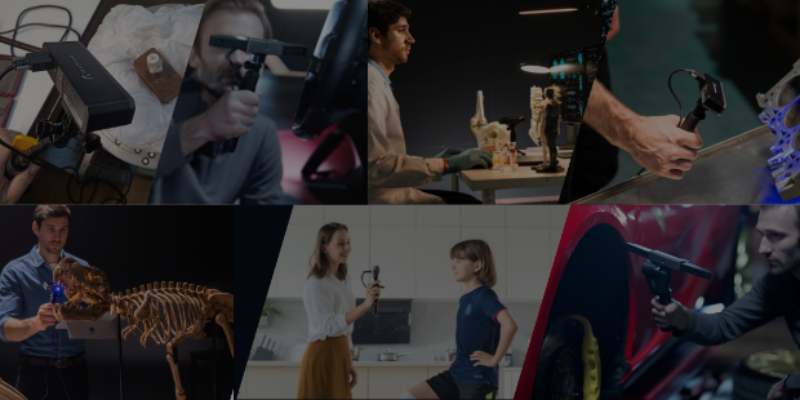
The reason 3D scanning is becoming more important is easy to understand: modern businesses want to move from physical object to digital model faster, with fewer mistakes. Revopoint groups its application areas around industrial applications, 3D printing, reverse engineering, vehicle modification, healthcare, arts and design, and historic preservation. That range is important because it shows this is not a niche design tool anymore. It is a bridge between the physical world and digital production, inspection, customization, and education.
That demand is visible locally as well. Protomont’s own services and content position 3D scanning around reverse engineering, production workflow, and faster, more accurate capture for manufacturing work. Its 3D scanning and reverse-engineering page says the company provides high-precision scanning services in Mumbai and across India, while a January 2026 Protomont blog explicitly frames scanners as tools that improve production speed and accuracy. In plain business language, that means scanning is no longer just for R&D labs. It is increasingly tied to repair, product development, quality checks, aftermarket modifications, and custom manufacturing.
The ROI conversation is also changing. A scanner does not only save measurement time. It can reduce design rework, speed up quoting, help teams inspect parts faster, and make it easier to build re-orderable digital archives of physical components. For a product designer, that means less manual remodeling. For a factory or vendor, it can mean faster reverse engineering and inspection. For a training institute or student lab, it means learning by scanning real objects instead of imagining forms from scratch. That is why the best 3D scanner in India is not a universal machine. It is the one that solves your most frequent and costly workflow bottleneck.
Understanding scanner categories
Before comparing models, it helps to understand what buyers are really choosing. Revopoint’s own catalog separates scanners into portable, standalone, industrial-grade, and tracking laser systems. In practice, however, most buyers think in three easier buckets: handheld scanners, desktop-style scanning workflows, and industrial tracking systems.
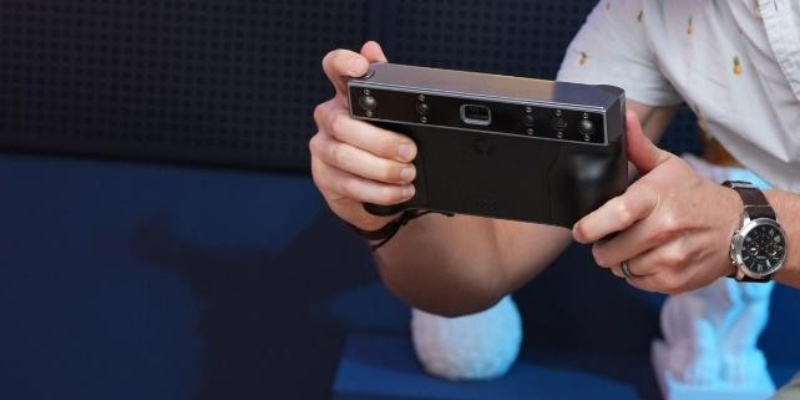
A handheld 3D scanner is what most small businesses imagine first. You move it around the object, or the object around the scanner, and capture geometry from different angles. This is ideal when you need flexibility, when the part is medium or large, or when you work on-site. Models such as INSPIRE 2, MINI 2, RANGE 2, and MetroX all support handheld workflows, though they are meant for very different object sizes and accuracy levels. INSPIRE 2 and MetroX are also described by Revopoint as supporting both handheld and desktop-style use.
A desktop-style workflow is best for controlled scans of smaller parts. In this setup, buyers often use a turntable, tripod, or fixed-position arrangement to reduce movement errors and simplify alignment. That is especially useful for small components, jewelry, product design parts, and teaching environments where repeatability matters more than field portability. MINI 2 is the clearest fit when tiny detail comes first, while MetroX brings far more metrology capability when inspection and reverse engineering are the goal.
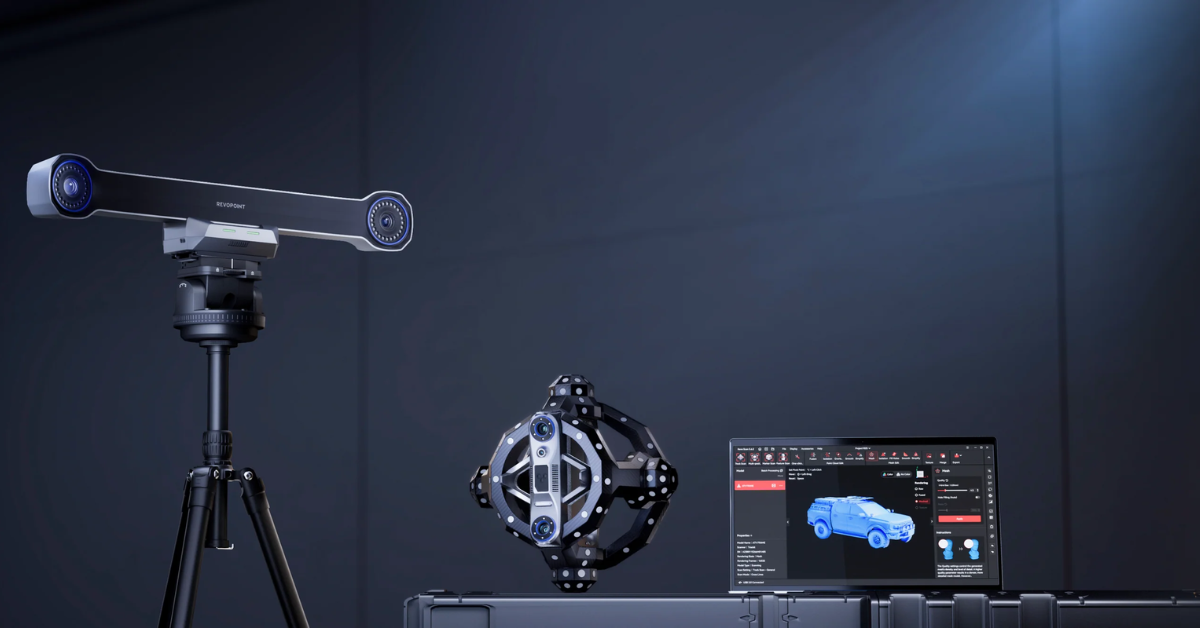
The third category is industrial tracking. This is where buyers move beyond hobby or studio scanning into production-level workflows. Trackit sits here. It uses optical tracking, supports marker-free scanning, and is positioned for parts ranging from 10 mm to 6 meters. If your work involves automotive panels, fixtures, large assemblies, repetitive quality workflows, or larger industrial parts, this class of scanner changes the discussion from “can I scan it?” to “how fast and repeatably can I scan it?
Which Revopoint model fits your work
For many first-time buyers, Revopoint INSPIRE 2 is the most sensible entry point. It is built for small-to-medium objects, supports handheld and desktop scanning, offers up to 0.03 mm single-frame precision and 0.05 mm accuracy, and supports outdoor scans with multiple tracking methods. On Protomont’s current India listing, it appears in the roughly ₹44,999 to ₹64,999 range depending on configuration. If you are a startup, a design studio, a school lab, a maker space, or a buyer who wants a 3D Scanner for beginners without stepping into industrial pricing too early, INSPIRE 2 is the cleanest first recommendation.
If your parts are small and detail matters more than capture volume, MINI 2 is the better answer. Revopoint positions it as a blue-light scanner for small objects, with up to 0.02 mm single-frame precision, a 120 mm to 250 mm working distance, a capture range up to 168 × 132 mm, and up to 16 fps scanning. The model is explicitly described for industrial inspection, jewelry design, customized healthcare, game modeling, and digitizing historical relics. In buyer language, that means MINI 2 is the scanner you choose when detail wins over convenience. If you scan rings, dental-adjacent models, miniature machined parts, collectibles, or highly detailed prototypes, MINI 2 makes more sense than a broader but less detail-focused portable scanner.
At the other end of the size spectrum, RANGE 2 is the practical portable 3D scanner for large objects, people, vehicles, furniture, and full-body work. Revopoint’s support material describes it with up to 0.1 mm single-frame precision, a 400 mm to 1300 mm working distance, and a large single capture area up to 860 × 1380 mm. The same support page also says RANGE 2 uses class 1 infrared structured light and can safely scan humans and animals. If your business is more likely to scan bike tanks, body panels, mannequins, furniture, or human form than tiny hardware, RANGE 2 is often the better fit than MINI 2 or MetroX.
MIRACO is different because it changes the workflow itself. Instead of tying you to a computer during capture, it is a standalone scanner with up to 0.02 mm precision, 0.05 mm accuracy, up to 15 fps scanning, two capture modes, near and far scanning, a 48-megapixel RGB camera, and up to two hours of scanning time in a 750 g body. For many buyers, that matters more than a single spec number. If your team wants an all-in-one machine for product development, fieldwork, training, or mixed-size objects without building a laptop-based scanning cart, MIRACO is easier to live with. As of Protomont’s current search-visible listings, MIRACO sits at ₹164,999, MIRACO Pro at ₹209,999, and MIRACO Plus at ₹264,999, with the Plus model positioned higher for photogrammetric metrology and larger-object accuracy.
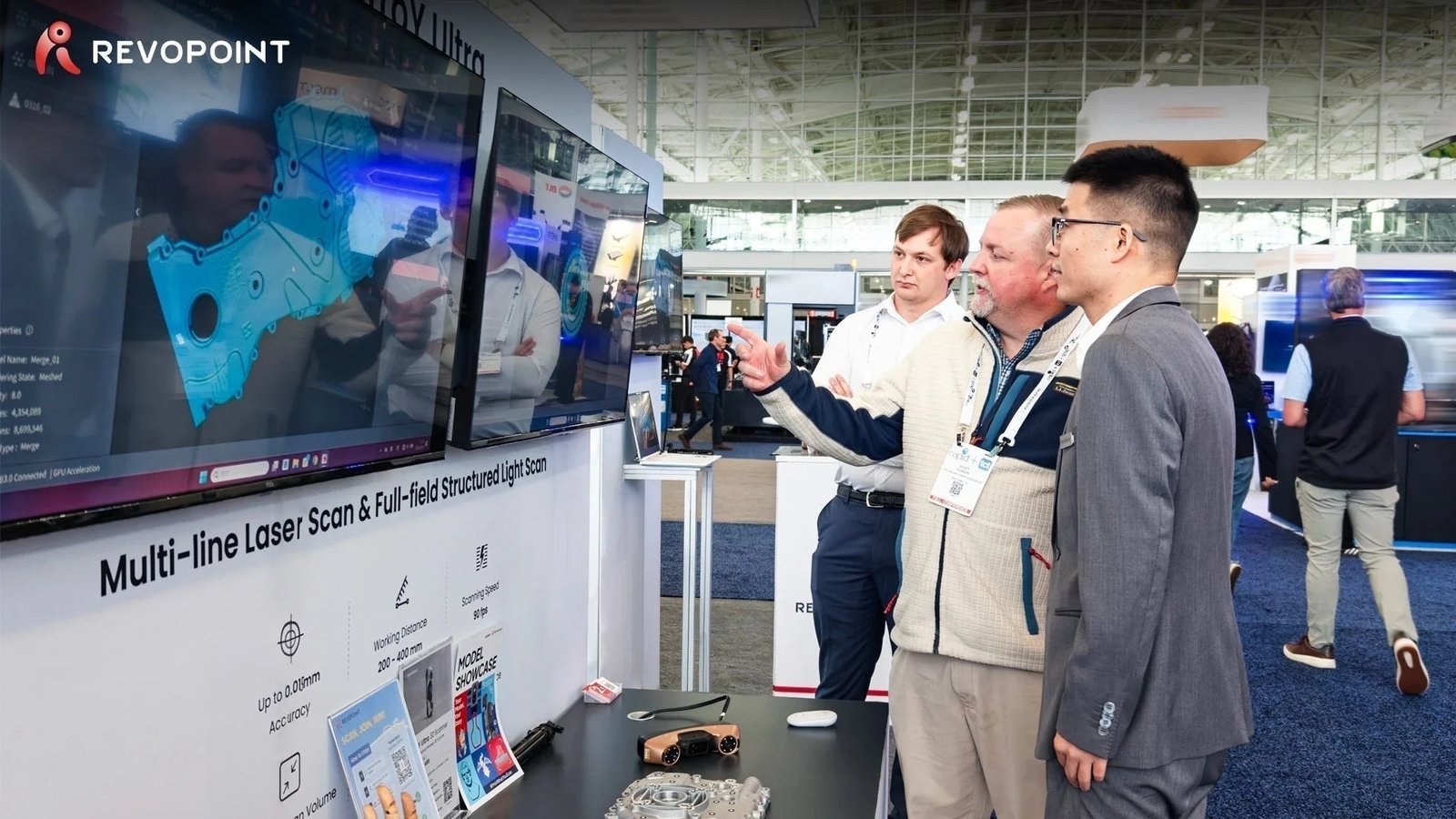
MetroX is where the conversation becomes more industrial. Revopoint describes the MetroX series as a metrology-grade 3D laser scanner for small-to-medium objects and specifically highlights reverse engineering and industrial design. The official comparison page lists up to 0.01 mm single-frame precision for MetroX-class industrial scanners, while the product page emphasizes blue laser lines, full-field structured light, automated turntable mode, and compatibility with Windows and macOS. It also notes that reflective, transparent, black, or highly specular surfaces may need scanning spray. In other words, if your real brief is 3D scanner for reverse engineering, inspection, or precise product development rather than general hobby use, MetroX feels like the correct industrial step. Protomont’s current listings put MetroX Standard at ₹139,999 and MetroX Advanced at ₹159,999.
Trackit is the heavy-duty choice. Revopoint says it supports marker-free optical tracking, uses 30 blue cross-line lasers, covers recommended part sizes from 0.01 m to 6 m, and delivers volumetric accuracy of 0.02 mm + 0.04 mm × L (m). The product page frames it for reverse engineering and manufacturing, while Protomont positions it as an authorized India offering. This is not the scanner you buy to explore 3D printing casually. It is the scanner you buy when larger industrial parts, faster setup, and a more production-ready industrial 3D scanning machine workflow justify the investment. On the local site it is listed, but industrial buyers should expect a direct consultation around configuration and quoting rather than thinking of it as a simple add-to-cart purchase.
If you want help narrowing those options, ask Protomont for a recommendation based on three things only: the size of the object you scan most often, how accurate the final model must be, and whether you want to scan with or without a laptop. That single conversation will usually eliminate half the catalog immediately.
How the leading models compare
The table below turns official positioning and specifications into buyer language. It is built from Revopoint’s official comparison tools and product pages, then aligned with Protomont’s current India listings.
| Model | Best For | Key Strength | Ideal User |
|---|---|---|---|
| Revopoint INSPIRE 2 | First-time business use and general-purpose scanning | Affordable entry point with handheld/desktop flexibility and outdoor capability | Makers, startups, institutes, students, product teams |
| Revopoint MINI 2 | Small parts and fine-detail capture | High precision blue-light scanning for tiny details | Jewelry makers, small-part inspectors, modelers |
| Revopoint RANGE 2 | Large objects and body scanning | Large capture area and long working distance | Automotive customizers, body-scan users, furniture and prop designers |
| Revopoint MIRACO | Mixed-size scanning without a laptop | Standalone workflow with near/far modes and onboard screen | Designers, trainers, field users, engineering teams |
| Revopoint MetroX | Reverse engineering and inspection | Metrology-grade laser plus structured-light workflow | Manufacturers, QA teams, industrial buyers |
| Revopoint Trackit | Large industrial parts and faster production workflows | Marker-free optical tracking for bigger parts and industrial speed | Automotive, tooling, manufacturing, serious reverse-engineering teams |
The price ladder on Protomont’s current listings also gives a useful buying map. INSPIRE 2 is the clear entry band at about ₹44,999 to ₹64,999. MetroX Standard and Advanced sit around ₹139,999 and ₹159,999. MIRACO occupies the next band at ₹164,999, with MIRACO Pro around ₹209,999 and MIRACO Plus around ₹264,999. Trackit is listed in the catalog, but buyers in that tier should treat pricing as a consultation-led industrial purchase. Prices and stock can change, so for a final quote it is better to ask Protomont directly than rely on a blog screenshot.
Where businesses actually make money with scanning
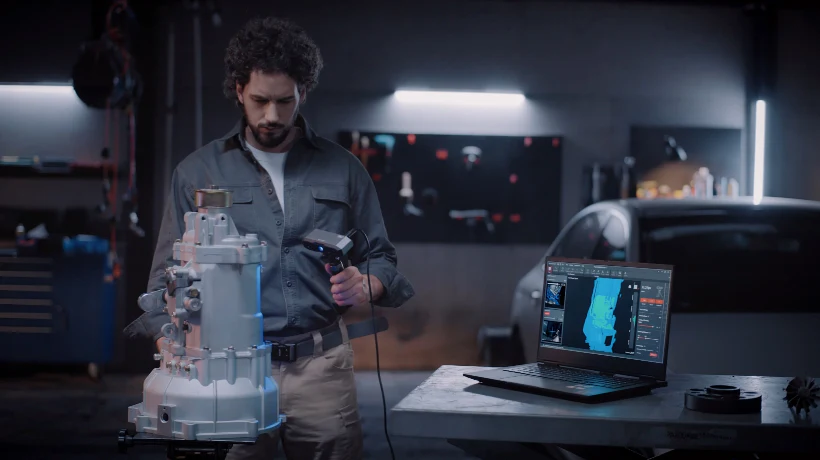
In manufacturing and repair, the clearest revenue use case is reverse engineering. A broken or legacy component arrives with no usable CAD. The team scans it, rebuilds the model, and gets it into CAD or production faster than manual measurement would allow. For this, MetroX is often the strongest value choice, and Trackit becomes more appealing when the parts are larger or the workflow is repetitive and industrial. Protomont’s own service positioning around reverse engineering and Revopoint’s industrial application focus both support that use case directly.
In inspection and quality control, accuracy and repeatability matter more than convenience. That is why industrial buyers tend to move toward MetroX or Trackit instead of entry handheld models. The Revopoint comparison material places MetroX and Trackit in industrial-grade or tracking-led workflows, and the Trackit system is explicitly built around measurement-oriented volumetric accuracy and faster capture on larger parts. For shops that supply machined, welded, or fabricated components, that is where scanning becomes tied to quality, not just design.
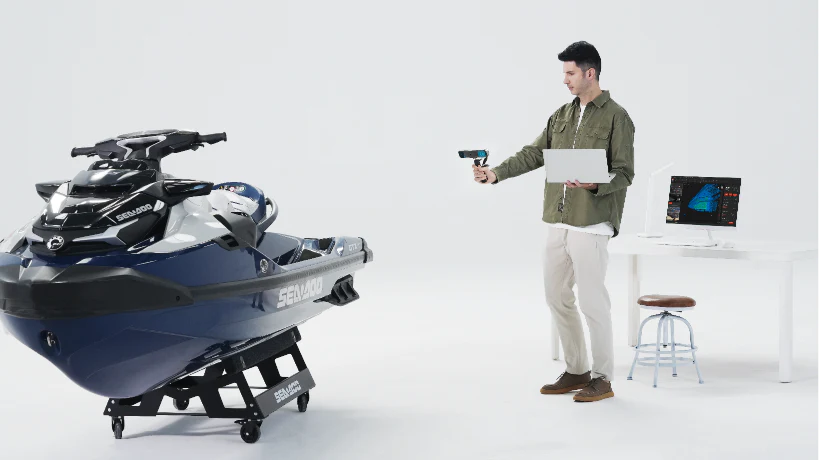
In automotive and customization, object size decides the purchase. RANGE 2 suits full panels, bodywork, seats, helmets, or vehicles better than a small-object scanner. MetroX suits engine parts, brackets, housings, and component-level reverse engineering. Trackit belongs in larger industrial automotive workflows where the volume and speed justify a tracking system. Revopoint’s own application pages and support guidance make that division clear.
In product design, prototyping, and education, the goal is often speed of learning and iteration rather than pure metrology. INSPIRE 2 and MIRACO are especially attractive here. INSPIRE 2 is friendlier on budget and aimed at hobbyists, makers, and 3D printing enthusiasts, while MIRACO removes the need for a tethered PC during capture and can handle both small and large objects in one device. For colleges, design labs, and early-stage product teams, that balance often matters more than absolute industrial accuracy.
In jewelry and small-detail work, MINI 2 is the more natural specialist. Revopoint explicitly positions it for tiny-detail scanning, jewelry design, healthcare-adjacent fine-detail workflows, and digitizing intricate objects. If your business makes money from small, detail-rich parts, buying a broader scanner and hoping it performs like MINI 2 is usually where disappointment starts.
How to choose without overpaying
The first question to ask is not budget. It is object size. If most of your work is small hardware, jewelry, miniatures, or detail-rich parts, start in the MINI 2 or MetroX zone. If you mostly scan medium objects, product prototypes, or mixed workshop jobs, INSPIRE 2 or MIRACO makes more sense. If your brief is people, furniture, vehicles, or large shapes, RANGE 2 belongs on the shortlist. If your parts can be as large as production assemblies and you need industrial efficiency, Trackit becomes relevant.
The second question is what you will do with the data. If you mainly want to create printable or visual models, an entry or mid-range handheld scanner may be enough. If you want to measure, inspect, or rebuild parts for engineering work, MetroX or Trackit becomes more appropriate. If you want to scan without managing a laptop during capture, MIRACO changes the workflow in a meaningful way because it is standalone.
The third question is how much computing power you want to maintain. RANGE 2 does not require a discrete GPU and Revopoint says its internal algorithms and chip do much of the processing. MetroX and Trackit are more demanding classes of scanners and are compatible with Windows and macOS rather than mobile devices. That matters because some buyers compare only scanner price and forget the PC requirement, which can change total ownership cost.
The fourth question is material and surface condition. Reflective, transparent, very dark, or highly shiny surfaces are still tricky for many scanners, and Revopoint’s guidance says scanning spray is recommended in several of those situations, especially with MetroX and also with large-object systems such as RANGE 2. If you scan polished metal or glossy plastics daily, account for that from the beginning.
The fifth question is skill level. If you are a beginner, do not start with an industrial system just because it sounds more future-proof. A business that only needs quick scans for prototyping or entry-level commercial work will usually get value faster from INSPIRE 2, RANGE 2, or MIRACO than from an overbuilt industrial setup. Buying the right workflow now is usually smarter than buying theoretical capability you may not use for another year.
Why buy from Protomont
For Indian buyers, the machine is only half the decision. The other half is who will support it after the sale. Protomont’s site snippets repeatedly describe the company as an authorized distributor and trusted partner for Revopoint 3D scanners in India. Its warranty materials say Revopoint 3D scanners sold through Protomont are genuine, new, and covered by a one-year limited manufacturer warranty starting from the invoice date. Search-visible product snippets also point to Pan-India delivery, technical support, training resources, and local service flow through the company.
That local layer matters because today’s Revopoint lineup is broad enough that buyers genuinely need guidance. An engineering buyer choosing between MIRACO and MetroX is not making the same decision as a jewelry studio comparing MINI 2 against an entry model, or a college lab deciding between INSPIRE 2 and RANGE 2. Buying through a local authorized channel reduces the risk of mismatch and gives you a clearer path for warranty claims, support, and follow-up questions.
It also helps from a content and research perspective. Protomont’s current blog already covers what 3D scanners are used for, pricing factors, and how scanners improve production speed and accuracy, so the strongest published version of this page is one that links readers from discovery to comparison to purchase instead of repeating those topics in isolation.
When this article goes live, the strongest internal links are obvious: link to the 3D Scanner category page, the Revopoint brand page, the reverse-engineering service page, and the existing Protomont posts on 3D scanner uses, pricing, and production speed. That improves both buyer navigation and on-site SEO without forcing extra sales language into the article itself.
FAQs and next step
Which 3D scanner is best for beginners?
For most first-time buyers, INSPIRE 2 is the easiest recommendation because it sits at the entry price band, supports handheld and desktop workflows, works on small-to-medium objects, and is positioned for hobbyists, makers, and 3D printing use cases. If the buyer wants an all-in-one workflow without carrying a laptop, MIRACO is the stronger beginner-friendly upgrade.
Which model is best for reverse engineering?
If the work is small-to-medium industrial parts and accuracy matters, MetroX is the stronger fit. If the job involves larger parts, faster production scanning, or marker-free industrial workflows, Trackit is the better long-term choice.
Can I scan large objects or the human body?
Yes, but the right tool matters. RANGE 2 is built for large objects such as furniture, people, and vehicles, while MIRACO can switch between near and far modes for mixed-size work. RANGE 2’s support material also states that it uses class 1 infrared light and can safely scan humans and animals.
Can I scan shiny, black, or reflective parts?
Often yes, but not always directly. Revopoint’s guidance for MetroX and RANGE 2 says scanning spray is recommended or required in several cases involving transparent, highly reflective, black, or specular surfaces. Buyers who work with polished metal should plan for that from the start.
Do I need a powerful computer?
It depends on the model. RANGE 2 does not need a discrete GPU, according to Revopoint’s support guidance. MetroX and Trackit are in the class of scanners that run on Windows and macOS rather than mobile devices and are more demanding in practice than entry handheld models. MIRACO can scan standalone, which is one of its biggest advantages.
What software will I use?
Revopoint groups its software tools by workflow. Revo Scan supports many structured-light models and post-processing tasks, while the support center also separates Metro and Track workflows into dedicated tools. Revopoint says these core software tools are free to use, while professional add-ons such as Revo Design and Revo Measure are optional paid tools.
Is 3D scanning profitable for a small business
It can be, but only when it is tied to a service people will actually pay for. Reverse engineering, product development, custom automotive work, full-body scanning, educational labs, and small-detail design work all map to real applications shown in Revopoint’s ecosystem and Protomont’s local service positioning. Profit comes from solving an expensive problem faster, not from owning a scanner by itself.
Why buy from an authorized local distributor instead of importing?
Because local support changes the risk profile. Protomont positions itself as an authorized Revopoint distributor in India, offers a one-year local warranty path on Revopoint scanners it sells, and supports buyers with training-oriented content, support pages, and India-based sales contact. That makes the buying process more practical, especially for industrial or educational customers.
How should you take the next step?
If you are a first-time buyer, start by deciding whether your objects are mostly small, medium, large, or industrial-scale. Then ask Protomont to recommend one model, not six. If your use case is mixed and mobile, begin with MIRACO. If you want a lower-cost entry point, start with INSPIRE 2. If you care about tiny detail, look at MINI 2. If you care about industrial reverse engineering, focus on MetroX. If you care about bigger industrial parts and throughput, move straight to Trackit. Then call or message the Protomont sales team on +91 9324898118, or use WhatsApp and the site contact options to request a quote, technical consultation, or a demo discussion in Mumbai.
The best 3D scanner in India in 2026 is not the one with the longest spec sheet. It is the one that matches your object size, accuracy target, workflow, and business goal. If you choose by that logic, the shortlist becomes much simpler and the investment becomes much easier to justify.